The global automotive powertrain sector is undergoing a profound paradigm shift. While battery electric vehicles capture public attention, internal combustion and hybrid powertrains remain the backbone of commercial logistics, delivery fleets, and rural transport throughout North America. To meet Euro 7, EPA Tier 3 Bin 30, and California CARB LEV-IV targets, oxygen sensing must achieve near-zero cold-start latency and unprecedented dynamic accuracy across non-stoichiometric combustion events.
1. The Shift from Thimble to Planar Wideband Architecture
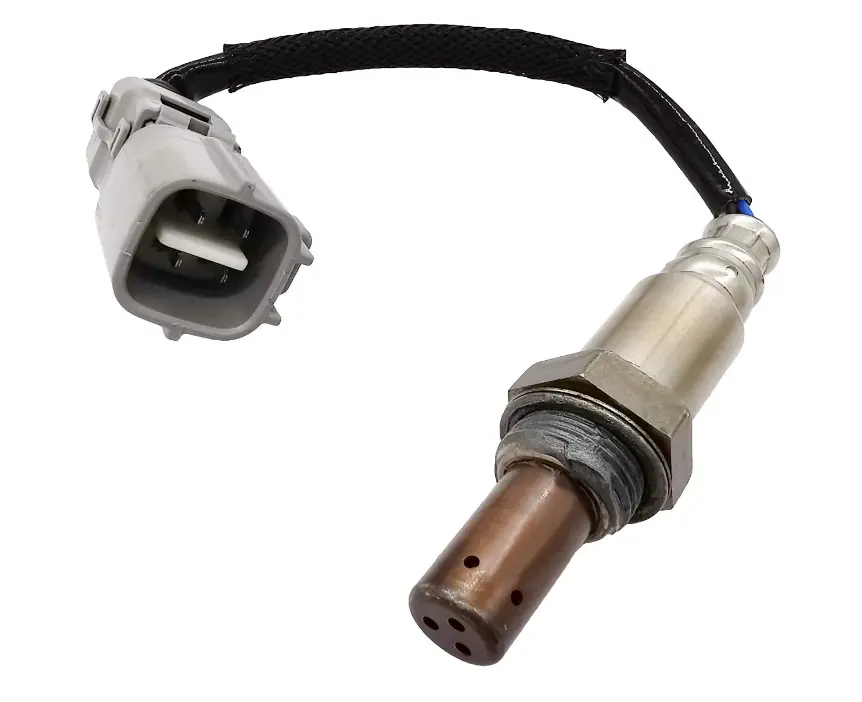
Traditional thimble-type sensors rely on a hollow zirconia finger that requires up to 60 seconds to reach operating temperature without auxiliary heating. In contrast, Hualeao’s modern planar sensors combine the measuring cell, reference air chamber, and co-fired ceramic heater into a monolithic multi-layer tape structure. This achieves:
- Light-Off Acceleration: Functional heating to 350°C in under 10 seconds, drastically minimizing hydrocarbon (HC) and carbon monoxide (CO) spikes during cold-engine cranking.
- Thermal Efficiency: Heater wattage is reduced by 40%, placing lower electrical load on the vehicle alternator and 12V DC-DC converters in mild-hybrid architectures.
- Ultra-Compact Envelope: Thinner ceramic layers reduce inertia, allowing sensor elements to react dynamically to transient throttle variations.
2. Solving Fuel Contamination in Bio-Ethanol (E10 to E85)
In states like New York, standard retail gasoline frequently contains up to 10% or 15% ethanol (E10/E15), with flex-fuel vehicles accepting up to 85% ethanol (E85). Alcohol fuels produce higher moisture levels in the exhaust gas stream, forming carbonic and formic acid vapors that corrode traditional sensor terminals and induce surface pitting on catalytic coatings. Hualeao integrates an advanced dual-spinel anti-poisoning barrier coupled with passivated stainless steel hardware, guaranteeing zero functional drift across 100,000+ miles of high-ethanol combustion.
3. Future Trajectory: Smart CAN-Bus Connected Sensor Nodes
As commercial fleet telematics expand across New York City and interstate corridors (I-90, I-87), future engine management platforms demand smart sensors that convert analog millivolt signals directly into digital CAN-Bus or LIN-Bus data packets. Our engineering roadmap includes onboard microcontrollers capable of transmitting real-time sensor aging status, heater resistance degradation curves, and exhaust gas temperature telemetry directly to cloud fleet management dashboards, preventing roadside emissions inspection failures proactively.