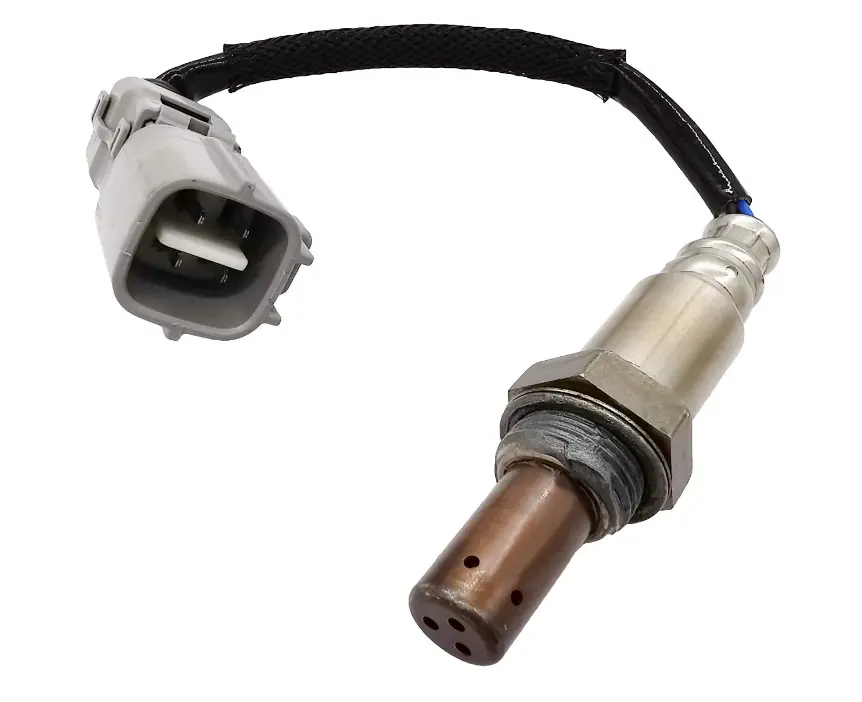
Globally, the automotive sensor domain has advanced from legacy single-wire unheated thimble sensors to sophisticated multi-layer planar zirconia structures. An oxygen sensor operates as a solid-state electrochemical concentration cell based on Yttria-Stabilized Zirconia (YSZ). Above 350°C, the YSZ ceramic lattice permits oxygen ions (O²⁻) to migrate between reference ambient air inside the sensor shell and exhaust gases passing across the outer electrode.
The resulting electromotive force (EMF) follows the Nernst Equation:
E = (RT / 4F) × ln( P(O₂_ref) / P(O₂_exhaust) )
In stoichiometric conditions (λ = 1.0, approximately 14.7:1 air-fuel ratio for standard gasoline), the sensor voltage undergoes an abrupt step-transition between 0.1V (lean mixture, excess oxygen) and 0.9V (rich mixture, depleted oxygen). In contemporary Euro 5 and Euro 6 architectures, the powertrain relies on two distinct sensor placements:
| System Position |
Primary Function |
Sensor Type |
Critical Performance Parameters |
| Upstream (Pre-Cat) |
Dynamic closed-loop air-fuel trimming; continuous fuel injection adjustment |
Wideband (UEGO) or Fast-Light-Off Planar Narrowband |
Response time τ < 15msec; heater activation < 5 seconds; thermal stability to 950°C |
| Downstream (Post-Cat) |
Catalytic converter oxygen storage capacity (OSC) diagnostic & OBD confirmation |
Narrowband Switching Zirconia Thimble or Planar |
High baseline signal stability; resistance to poisoning; accurate drift monitoring |
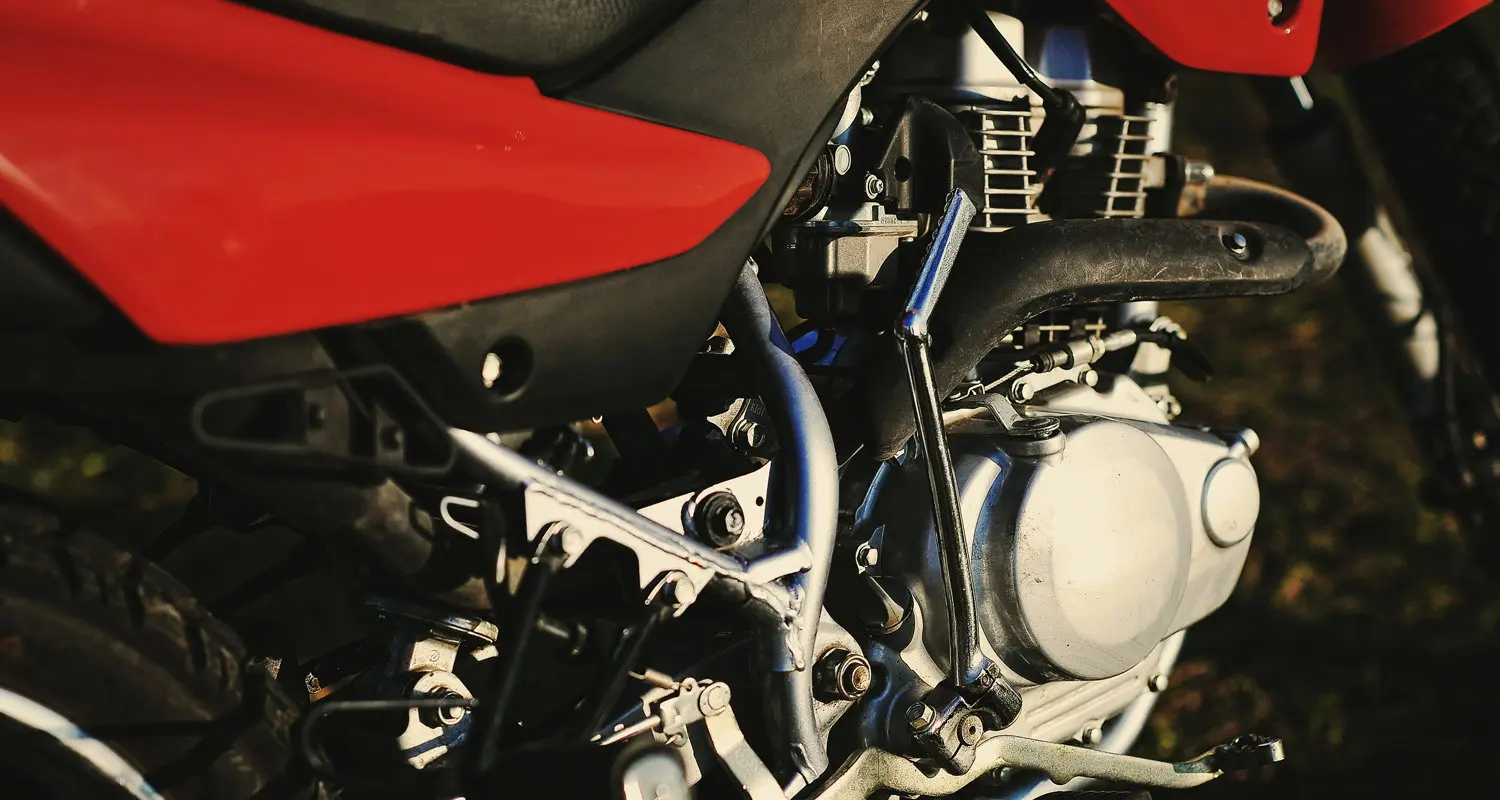
| Motorcycle Small EFI |
Single closed-loop ECU compensation for single-cylinder 4-stroke engines |
Miniaturized 1-wire, 2-wire, or 4-wire Heated Thimble |
Vibration resistance (> 30G); waterproof IP67 harness; compact thread (M12 × 1.25) |
Modern global engine compliance dictates that downstream sensors must not drift beyond ±15mV across a 160,000 km lifecycle. Meeting these rigorous benchmarks requires pristine control over platinum catalytic paste sputtering, porous ceramic protective coatings (spinel plasma spray to prevent lead, phosphorus, and silicon poisoning), and ceramic-to-metal braze integrity.