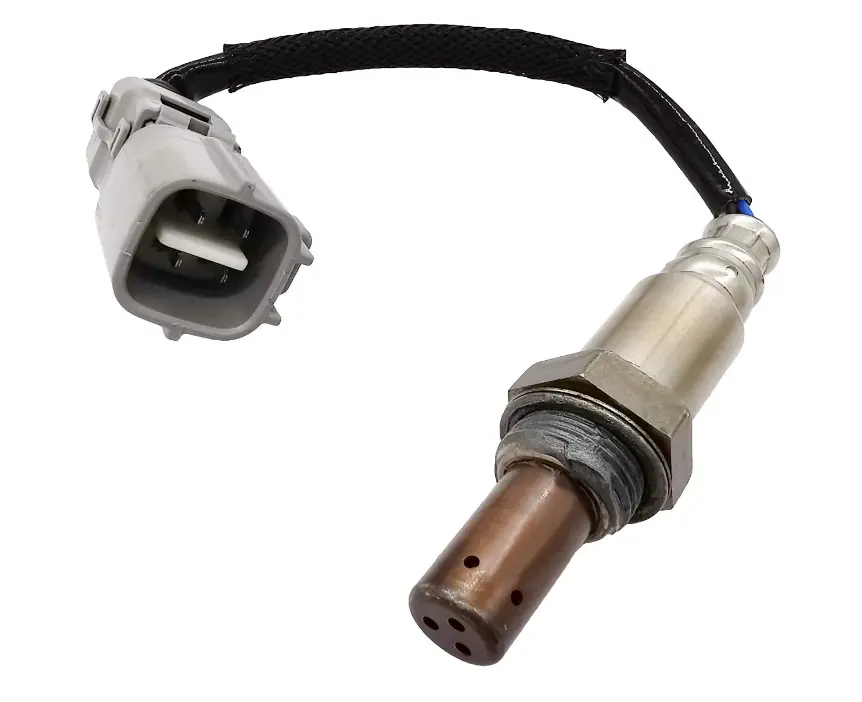
In contemporary closed-loop internal combustion engine management, the exhaust oxygen sensor serves as the primary feedback transducer governing fuel trim calculations. In demanding operational territories such as the Houston-The Woodlands-Sugar Land metroplex, vehicles and stationary auxiliary equipment endure prolonged operation at extreme temperatures (often exceeding 100°F ambient) paired with near-saturation humidity. Under these operational vectors, conventional thimble-type sensors suffer from delayed response times and accelerated ceramic poisoning.
Hualeao's planar oxygen sensor platform utilizes laminated zirconia (ZrO2) ceramic tapes co-fired with an integrated internal heating element at sintering temperatures exceeding 1450°C. This monolithically bonded architecture allows the sensor to attain operational temperature (>350°C) within less than 10 seconds, drastically reducing open-loop cold start hydrocarbon emissions—a paramount metric for regional TCEQ (Texas Commission on Environmental Quality) compliance inspections.
| Performance Parameter |
Standard Aftermarket Sensors |
Hualeao Heavy-Duty Houston Grade |
Engineering Benefit |
| Light-Off Response (T60) |
18 – 25 Seconds |
≤ 8.5 Seconds |
Immediate closed-loop feedback, cutting cold emissions |
| Ceramic Substrate Material |
Standard Monolithic Zirconia |
Multi-Layer Co-Fired Planar Pt-ZrO2 |
Superior resistance to thermal shock and moisture cracking |
| Sulfur & Phosphorus Defense |
Single Perforated Cap |
Plasma-Sprayed Porous Spinel Coating |
Prevents catalytic surface poisoning from Texas heavy crude byproducts |
| Operating Temperature Envelope |
Up to 800°C |
Continuous 950°C (1050°C Peak) |
Sustained durability in turbocharged and high-load towing cycles |
| Lead Wire Shielding |
Standard PVC Sleeving |
Fluoropolymer + Dual Silicone Fiberglass |
Oil-, chemical-, and thermal-resistance against road brine and lubricants |
Technical Roadmap & Next-Gen Telemetry: Looking toward 2026–2030 standards, Hualeao is accelerating development on digital CAN-bus integrated lambda sensors equipped with localized micro-ASIC signal processing. By transforming millivolt analog signals into digitized CAN-FD telegrams directly at the sensor header, our next-generation units eliminate wire harness signal attenuation and EMF interference caused by high-voltage EV and hybrid invertor circuits found in modern dual-power powertrains.